When the Driver Doesn't Stop: What Alabama Families Should Know After a Hit-and-Run
Two Alabama hit-and-run deaths made news this week. A Pelham lawyer explains police reports, uninsured motorist coverage, and deadlines after a driver flees.
Two stories in the news this past week stuck with me.
In Birmingham, police made an arrest in a case from November 6, 2022. That morning Martin Michael Cruse, 42, ran out of gas on I-65 South near Green Springs Avenue and was walking on the interstate when a car hit him and kept going. On September 28, nearly four years later, a man was booked into the Jefferson County Jail and charged with manslaughter. According to AL.com and WBRC, the charging papers allege he was speeding and driving recklessly. He was released on a $30,000 bond. He's presumed innocent, and the case will be decided in court.
Then on Saturday, October 3, east of Tuscaloosa, 70-year-old Harry J. Martin Jr. was killed while walking on the shoulder of Alabama 216 near the 4-mile marker. State troopers believe the vehicle was a black Chevrolet Avalanche. The driver didn't stop. If you know anything, ALEA's Tuscaloosa Highway Patrol Post is at (205) 635-0001. Press 2 when you get through.
We have nothing to do with either case. I mention them because they show how hard it is on a family when the person responsible drives away, and how long the answers can take. Mr. Cruse's mother waited almost four years for an arrest.
If this happens to you or someone you love, here's what I'd want you to know.
First, get a police report made
Call 911 from the scene if you can. If you were hurt and couldn't, call the police department or ALEA as soon as you're able and make sure a report gets written up.
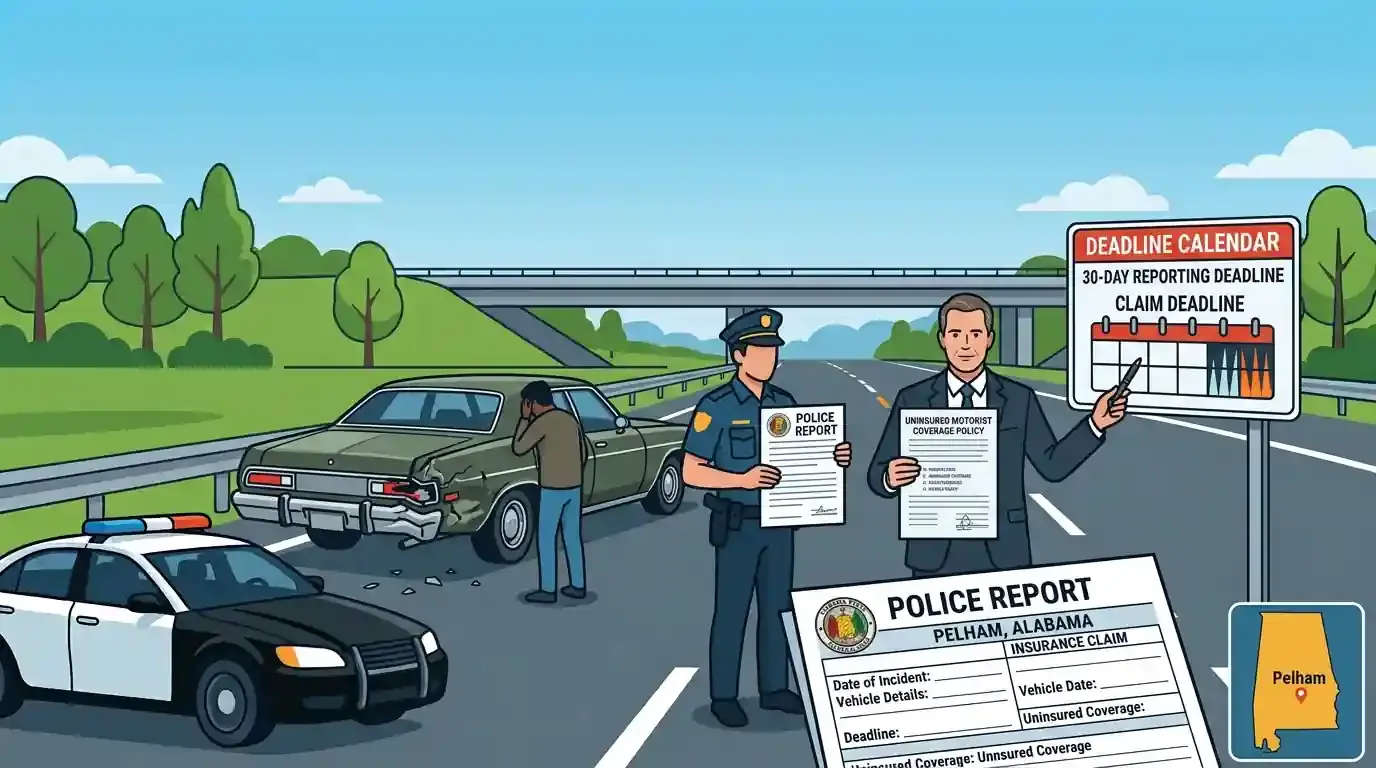
That report matters for more than the criminal case. Most uninsured motorist policies expect a hit-and-run to be reported to police promptly. If it isn't, the insurance company may use that against you.
Get the report number and the name of the officer or trooper.
Write down and photograph everything you can
Even small details can help find the driver. Color, make, damage, a partial tag, which way the car went. Write it down as soon as you can, before it fades.
Take photos of your injuries, the scene, your vehicle, and any debris. Pieces of a headlight or mirror left on the road have helped identify more than one car.
Look around for cameras. Gas stations, stores, and homes with doorbell cameras often record over themselves within days. If you have a lawyer, we can send letters asking them to preserve footage before it's gone.
Your own insurance may be the main source of recovery
This is the part people don't expect. When the driver can't be found, or is found but has no insurance, the money usually comes from your own policy's uninsured motorist (UM) coverage.
In Alabama, UM coverage can apply even when you were a pedestrian, and sometimes it reaches through a household member's policy too. Policies differ, and the details matter: who's covered, how much, whether coverage can be stacked, and what notice the policy requires.
Your own insurance company may treat you like the other side in a UM claim. That's not a knock on anybody. That's how the claim is set up. They'll want to pay as little as the policy allows.
Be careful with recorded statements
Soon after the wreck, an adjuster will likely call and ask to record your statement. It may sound routine.
You don't have to rush into it. Your policy may require you to cooperate, but cooperating doesn't mean answering questions on the spot while you're on pain medication and haven't seen the police report. A careless "I didn't see them coming" or "I guess I was a little off the road" can come back to hurt you.
Talk to a lawyer first. It doesn't cost anything to ask.
Alabama's contributory negligence rule is harsh
Most states let an injured person recover something even if they were partly at fault. Alabama doesn't.
Under Alabama's contributory negligence rule, if you're found even slightly at fault for your own injury, even 1 percent, you can be barred from recovering anything. There are exceptions, like when the other driver acted wantonly, but the rule is real and insurance companies know it well.
For pedestrians, that means you'll hear questions about where you were walking, what you were wearing, whether you were on the shoulder or in the lane. That's why the facts need to be nailed down early and why statements need to be handled carefully.
Watch the deadline
In most Alabama personal injury cases, you have two years from the date of the injury to file suit. Wrongful death claims generally also have a two-year limit.
Don't assume the criminal case will take care of the civil side. A criminal case can drag on for years. The Cruse case shows that. Your civil deadline doesn't wait for it.
As of October 1, 2026, Alabama's new Safe Streets Act lets criminal courts order restitution to hit-and-run victims after a conviction, and it raises penalties when someone is hurt or killed. That helps. But restitution only comes if there's a conviction and the defendant can pay. It isn't a substitute for a proper insurance claim or lawsuit.
How we can help
At John Medaris Law, we handle personal injury cases and insurance disputes, including uninsured motorist claims and cases where an insurer won't pay what it should. We've spent decades in Alabama courtrooms, and we know how these claims get defended.
We'll look at the police report, the policies that might apply, and the facts, and tell you honestly what we think. No promises about outcomes. Nobody can honestly make those.
If you or a family member were hurt by a driver who didn't stop, call us at (205) 663-1584. We're at 230 Bearden Road in Pelham, and the first consultation is free.